



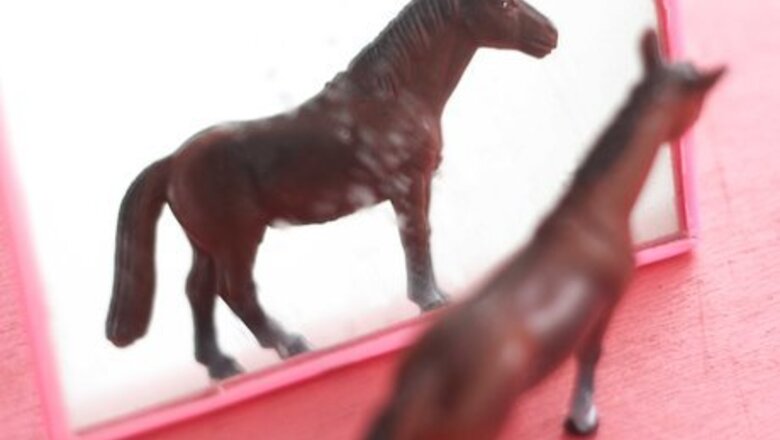

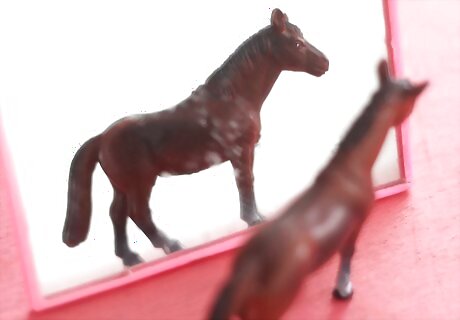
Be aware that horses are mirrors. If you are angry, they will be difficult or scared. It takes a very strong human to overpower a very strong horse, and even if the human wins, it's not always for the better. The relationship with your horse should always be as fair as possible. For example: Say that you are emotionally wired and you try to approach your horse. He's difficult to catch, and when you do catch him, he's jumpy and/or angry. This is because he's feeding off a negative energy source. He feels insecure and wants nothing more to get away from you. This means you should take a moment, step away from your horse, and relax. Taking deep breaths and leveling your emotions will likely result in a much better behaved horse.
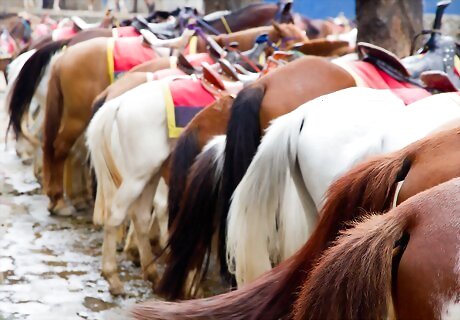
Note that some horses are difficult whether you have a good attitude or not. Sometimes this is genetics, how their mother raised them, or how a human has handled them in the past. It takes dedication, faith, and a lot of working on manners before your horse will listen to you. It is just like working with a human on their communication skills, only you absolutely need to listen to your horse. You must be advanced in managing your emotions and tenseness, because if you're not, you could wind up losing your horse, or either of you fatally injured.
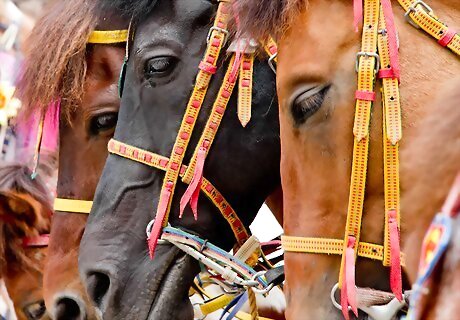
Choose an older horse if you're inexperienced. An old horse that has been through it all is a good start for beginners. Look for a horse that isn't fussed if you're unsure how to feed him or put a bridle on the correct way but remains sturdy and relaxed as you fuss about him. A horse like that can be hard to find, but they are the best teachers. They are the horses who care enough about humans to help them learn, despite the mistakes and miscommunications humans make with them. There is no breed that has more of this type of horse than the other. There are old, experienced horses everywhere. You must listen to the vibe you get from your horse to see if it's your match or not. Some breeds are bred purposefully to be high-strung and snorty. This doesn't mean you should listen to the stereotypical things like "Saddlebreds are so flighty," or "Arabs are crazy." Because not all of the horses in those breeds are flighty or crazy. Just like not all quarter horses are dull. Know what you like, and look for it in the horse itself, not in the breed it relates to.

Research the best method of controlling your emotions, and becoming confident. Mediation is one of the best methods for getting in touch with yourself and learning to be more confident within. With horses, acting more confident won't work, because horses are adept at reading body language. However, this does not mean that if a horse is threatening to kick or charge you, you can't discipline them and move on. Although he won't see your confidence, he will see that you're strong, and likely won't mess with you much more. Never hold a grudge against a horse. Horses have built-in responses, meaning that your horse might pin his ears at the sight of a saddle, simply because he knows it means work. However, he doesn't spend his stall time thinking about how much he hates saddles and what he's going to do the next time he sees one. Out of sight, out of mind.
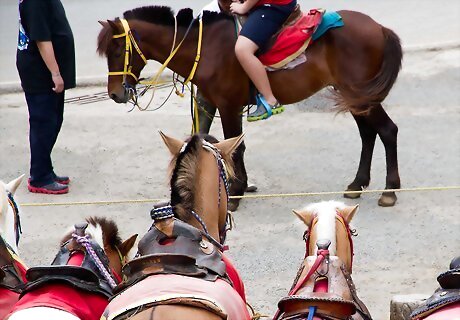
Bear in mind that your horse is not a human, and does not think the same way you do. There are countless times you may see people treating their horses as humans, and talking to them as if the horse really understands what they're talking about. Although it's good to talk to your horse, it's not good to keep screaming "I don't know why you're acting this way, after all I've done for you!" as if your horse understands. Horse language is body language, and that is extremely important to remember if you decide to own a horse--especially a difficult one. Knowing their body language (which takes time and patience) is better than the horse knowing your vocabulary. However, horses can be trained to respond to commands such as "trot," although they are not equipped with the same thought process to listen to every word that's said and understand.

Be more of a leader than a friend. Be both, but horses respond better to leaders, because they know their place in the ranking system. Horses work as a hierarchy, and at the top is, you guessed it, a leader. Next is an enforcer (side-kick of the leader) and so on and so forth. Most horses will bow willingly to a calm, assertive, fair leader, but others are determined to outrank everything. With problem horses like that, it takes a lot of patience and extreme levels of strength and managing your emotions. To be a leader doesn't mean you have to beat your horse regularly or be emotionless. In fact, when a horse does something good, shower them with praise and good feelings, because it reinforces the action. Discipline your horse when he behaves badly; do so in a fair, assertive way, and then move on. Catch the horse before he does something wrong and correct him by distracting him, or giving him a warning cluck or whatever command you choose for "pay attention."
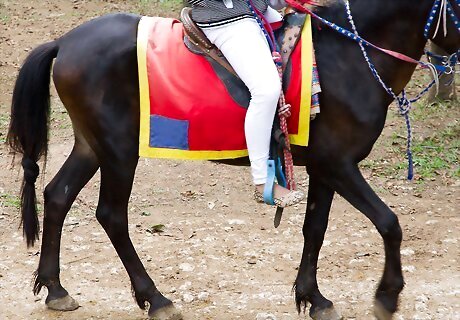
Learn gradually and methodically. It takes trial and error to determine what method of discipline, and how much to use, works for your horse. It takes a good trainer/owner to know that each horse is an individual and should be treated as such. Some horses need a light tap with a whip to move, while others may need a discussion about paying attention to what your commands are. If you are listening to your horse, he should be listening just as much to you. If he can get away with anything, he will. Find out what method and how much of that method gets your horse to respond, and stick with it. The greater the disobedience, the bigger the punishment, and then it's over. Once your horse is doing what he should be again, the pressure of your discipline should evaporate immediately. Remember this: as long as you are trying to listen to your horse, and your horse is listening to you, it's a start. Always remember to let your horse be who he is, not who you want him to be. If he hates a saddle on his back, get him to the point where he can have a saddle on his back (and possibly show, if you really want him to), and then try harness, or halter. Sometimes the horse you're dealt isn't cut out for what you want, and that's okay. As long as you are listening, and fair, you can make a horse do anything, including what he doesn't want to do. That's what training a horse is; taking a horse and making him do exactly what he doesn't want to. The trick is doing it in such a way that the horse realizes it's not so bad--especially if they have a good trainer/owner! Trust is everything. If you trust that you can take a wild, abused mustang from pasture and turn him into a well-mannered, happy, trusting show-horse in the next one or two years, then it will most likely happen.
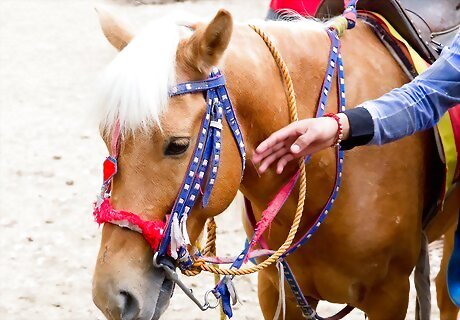
Be careful of what people term "abuse." Some people may think that "training the horse to do what he doesn't want to" is abuse. The reality is that it is more dangerous to leave them unhandled and distrustful. Not only is it unfair, it's dangerous for you and the horse's safety. For example, a barn catches fire, and the owner must get her horse out. However, the horse has an affliction to being caught, and puts up a fight about her entering the stall in a rush to get him. The owner can't just rush her horse out of the barn without being caught because there's a highway just outside, and he may get hit if he's loose. But the horse is bucking, kicking, and refusing her attempts to save him. This is a situation where it would have been a good idea to train the horse to trust being caught in a calm, submissive manner before something dangerous happened.
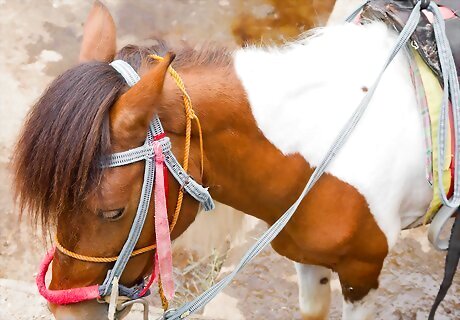
Value trust over pandering to the horse's fears. There are many situations like the one described in the previous step, where the owner is desperate to handle the horse in a way he doesn't approve of, and can get him/herself or the horse hurt. It's important to teach the horse to face his fears and walk near a bag that blows in the wind without shying into your body space, and to trust you, because one day you will seriously need his trust. Follow whatever path you choose and whatever method you think is best, but always be certain you have your horses trust, and that you trust your horse.











Comments
0 comment